




Jump to content
View in the app

A better way to browse. Learn more.

Structural Community

A full-screen app on your home screen with push notifications, badges and more.

To install this app on iOS and iPadOS
  1. Tap the Share icon in Safari
  2. Scroll the menu and tap Add to Home Screen.
  3. Tap Add in the top-right corner.
To install this app on Android
  1. Tap the 3-dot menu (⋮) in the top-right corner of the browser.
  2. Tap Add to Home screen or Install app.
  3. Confirm by tapping Install.
A group blog by Structural Community in Civil and Structural Engineering
  • Entries

    23
  • Comments

    0
  • Views

    18,767

Contributors to this blog

About this blog

Use this category to post articles, tips and tricks you've learned. Any topic covering civil & structural engineering is acceptable.

Entries in this blog

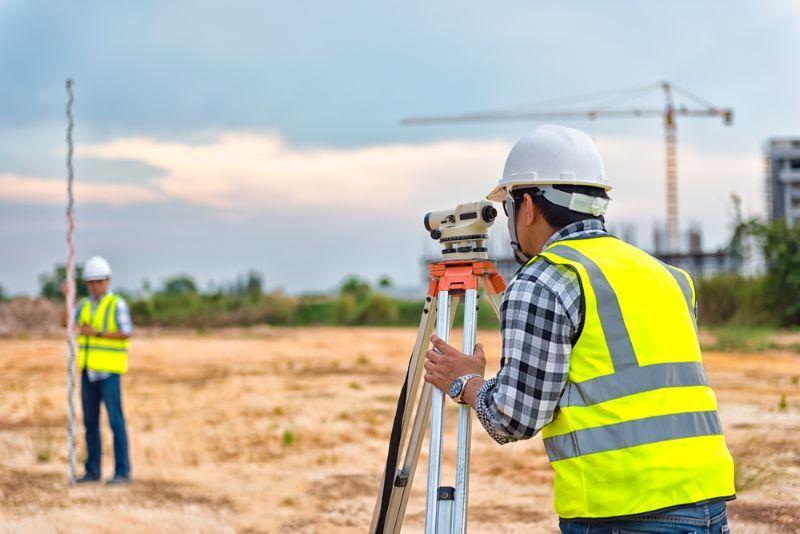
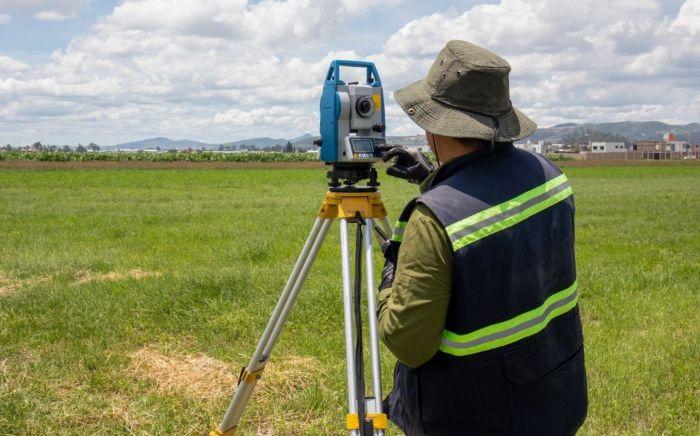
Surveying Surveying is a technique in by which measurements are taken on the surface of the earth and presented on the maps or stored in the digital format and vice versa. There are following types surveying, 1. Plane surveying It is meant for small areas where the surface of the earth is taken to be plane surface, i.e. curvature of the earth is ignored. e.g. for survey inside a city. 2. Geodetic surveying In this curvature of the earth is taken into consideration. e.g. National surveys, Basic t
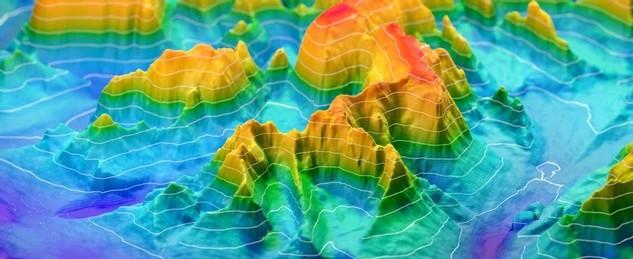
Photogrammetry Photogrammetry is the branch of surveying in which measurements are made from photographs. Merits This is a very quick and accurate method of surveying in which the ground observations are almost totally eliminated. This is very accurate method if true interpretations of photographs are made. It also provides means to develop a Contour map. Demerits This method requires fair weather conditions. The instrument is very expensive, and staff should be highly qualified and experien
By deflection angle method Bearing of the first line AB is measured with the help of prismatic compass or by any other method. Setup the theodolite and point B and with horizontal circle reading bisect point A. Transit the telescope and rotate it in the direction of next station point C and note the angle, this will be θ1 R and is called deflection angle at B. Repeat this procedure for the remaining points of traverse measuring the deflection angle and writing with them letter "L" or "R". Fo
For open traversing Following procedure is adopted in case of open traversing with the help of prismatic compass, We will setup the compass at point A, B, C and so on and note the Fore Bearing and back Bearing of lines. The length of lines or legs are measured by chain twice and mean lengths are calculated. During taking measurements in the field, the method used angular measurement, and linear measurement should be of same standard of accuracy, i.e. either combination of Prismatic compass an
Vertical angle It is the angle in the vertical plane between horizontal line passing through the intersection of cross hairs and inclined line joining intersection of cross hairs and the point being observed. Circle reading in case of vertical angle During Face left vertical angle will be computed in the following manner, When angle of elevation, vertical angle = 90° - Circle reading. When angle of depression, vertical angle = Circle reading - 90°. Now, during Face right vertical angle will b
Introduction Sometimes it needs to approximate the distance between two points. One can do it without using any distance measuring instrument. But firstly, you need to compute your own pace length, then you can use your pace length to approximate the actual distance. However, it is not accurate enough to use into the calculations or computations. Procedure open a chain and let it fly in straight position along the piece of ground. Walk along the chain and count the number of steps. The distanc
1. Pacing Permissible error ≤ 1 feet in 20 feet. 2. Chain Permissible error ≤ 1 in 1000. 3. Metallic tape Permissible error ≤ 1 in 1000. 4. Steel tape This tape is made of steel alloy of very small co-efficient of thermal expansion. Permissible error ≤ 1 in 1000. 5. Invar tape This tape is made of very expensive steel alloy of almost negligible co-efficient of thermal expansion and is used for very precise linear measurements. Permissible error ≤ 1 in 50,000. 6. Tachometry Permissible error ≤ 1
Leveling It is the branch of Surveying in which relative elevations of points are determined. There are following Types of Leveling 1. Ordinary leveling It is general purpose Leveling and unless otherwise stated all types of Leveling will come into this category. 2. Reciprocal leveling This is done when a site is unusually long, i.e. crossing the river. Sights are taken from the two banks by placing the staff on the opposite bank almost simultaneously and finding the average of apparent differen
1. Tripod It should be of a rigid type capable of fixing the position of the instrument with a small lateral movement on its top when required. 2. Foot screws These are provided for leveling the instruments. 3. Plate level Provided for checking the level of the instrument. 4. Horizontal clamp Provided to clamp the movement in horizontal plane. 5. Vertical clamp For clamping movement in vertical plane. 6. Slow motion screws These screws are used to move Theodolite either vertically or horizontall
Fore bearing It is the bearing of line when the first letter of line say AB is taken as origin. This is to be written as Fore Bearing (F.B). Back bearing It is the bearing of line when second letter of line say AB is taken as origin and this is to be written as Back Bearing (B.B). Theoretical difference between Fore Bearing (F.B) and Back Bearing (B.B) should be 180°. Local attraction If the difference between magnetic Fore Bearing and Back Bearing of a line is not exactly 180°, it may be due to
Latitude and Departure In order to do start with Theodolite Traversing you should be familiar with the Latitude and Departure which are discussed briefly below, OA is the line with whole circle bearing equal to θ. OC = Latitude = lCosθ OB = Departure = lSinθ By using the above formulae for Latitude and Departure with whole circle bearing, calculator will be giving algebraic sign automatically for Latitude and Departure. For a closed Traverse ∑ of all Latitude is equal to zero and ∑ of Depart
Leveling equipment a) Level There are different types of Levels as follows, 1. Dumpy level It is the type of Level in which whole body of level is cast in one unit. 2. Tilting level Still being used, Level can be tilted in vertical plane with the help of tilting drum. 3. Automatic level In this type, the line of sight becomes horizontal when the Level is within certain limits. This system provides the works on the principal of gravitation. b) Staff It is the graduated rod of maximum 5m length us
Angle measurement For angle measurement with theodolite vertical hair is used. Basically, there are two methods horizontal angle measurement, Repetition method (For single angle) Reiteration method (For more than one angle) 1. By Repetition method Let suppose it is desire to measure the angle A from the following figure. We will use repetition method for this purpose. Procedure Setup the theodolite at station A. Bisect the point B with vertical hair of theodolite and move telescope in clockw
Traversing It is the method of establishing horizontal controls. Traverse Traverse is a series of connected lines forming or not forming a loop. In the first case it is called closed traverse (when the loop is formed) and in the second case it called open traverse (when loop is not formed). Vertical control That is the reference point in vertical plane, it includes series of benchmarks and points of known elevations. Horizontal control It is the series of points in the horizontal plane of known
Meridians Meridian is a reference direction with respect to which the direction of lines is mentioned. There are three types of meridians - True Meridian, Magnetic Meridian & Arbitrary Meridian 1. True Meridian It is the reference direction of north pole of earth from a given station point. It is also called geographic meridian. 2. Magnetic Meridian It is the direction of north pole indicated by magnetic needle. 3. Arbitrary Meridian This is any assume direction to a well-defined object. It
1. Using rise and fall method In this method booking is done in the following manner, B.S I.S F.S Rise Fall R.L Remarks 2.570 - - - - 100.00 A 3.750 - 1.200 1.370 - 101.37 C.P - - 3.750 - 0.70 100.67 B 5.620 - 4.950 1.370 0.70 - - 1) On any page of book, the first reading is always a B.S and last reading is always a F.S. If you are not getting F.S as last reading on each page, then it means you have done mistake while booking readings. 2) From the B.S next F.S is subtracted. If the answer is pos
History of electronic distance measurement In surveying distance measurements were always a challenge for surveyors specially when long distances were to be measured with high accuracy. In 1950 scientist tried to calculate the distance by using light beam to travel over unknown distance with measured time. Ordinary lights travel at a velocity of 186,000 miles per second, therefore the time taken will be very small to cover a short distance. This idea was soon dropped but the scientists succeeded

Important Information

By using this site, you agree to our Privacy Policy.

Configure browser push notifications

Chrome (Android)
  1. Tap the lock icon next to the address bar.
  2. Tap Permissions → Notifications.
  3. Adjust your preference.
Chrome (Desktop)
  1. Click the padlock icon in the address bar.
  2. Select Site settings.
  3. Find Notifications and adjust your preference.